When an Orthodontist Would Recommend Wearing a Night Guard
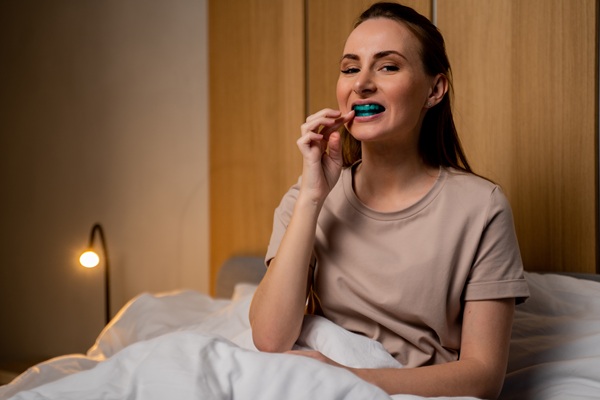
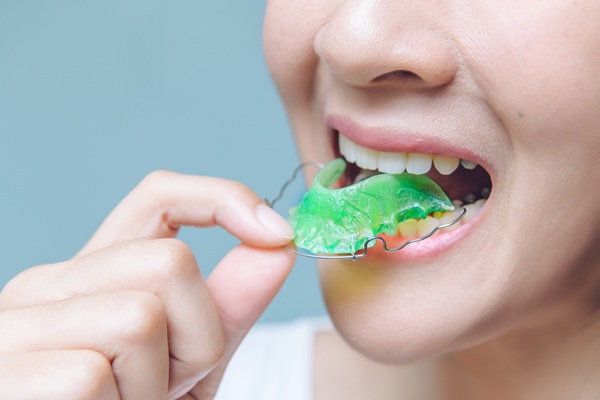
An orthodontist might recommend wearing a night guard if you have bruxism. The device prevents you from grinding your teeth while you sleep. Also known as an occlusal guard, a night guard is a custom-made removable device that fits between the lower and upper sets of teeth. The appliance provides a cushion that prevents you from wearing down your teeth and repositions your jaw to be in a more natural position.
Reasons an orthodontist might recommend a night guard
There are two main reasons why an orthodontist might recommend a night guard. These are:
1. Bruxism
The top reason why an orthodontist might recommend a night guard is teeth grinding. Medically termed bruxism, teeth grinding eventually leads to damaged teeth, tension headaches, and jaw pain. During these episodes, the upper and lower sets of teeth grind against each other, eroding their structures.
Most people who grind their teeth are not aware of their condition. The behavior typically occurs involuntarily and unconsciously, usually during sleep. It is often discovered by dentists who notice damage congruent with teeth grinding during examinations.
When left unchecked, teeth grinding can cause temporomandibular joint (TMJ) disorder. The TMJs are the sliding, hinge-like joints that attach the lower jaw to the rest of the skull. Issues with these joints can lead to chronic pain around the face, neck, and jaw. Bruxism has also been linked to sleep disorders like insomnia and sleep apnea, which both negatively impact your general health.
Night guards can be quite effective at mitigating the effects of teeth grinding that occurs during sleep. It is an effective and safe solution that provides a cushion between the lower and upper sets of teeth. It also helps to prevent the jaw from shifting during sleep, protecting against temporomandibular joint disorders.
2. Sleep apnea
While night guards are mostly used to protect teeth against the effects of teeth grinding, they can also be used to address some types of obstructive sleep apnea. Wearing one to sleep prevents the soft tissues of the mouth from obstructing the airway during sleep, alleviates the workload of jaw muscles, and shifts your jaw forward during sleep, making it easier to breathe as you sleep. It can be used as a standalone treatment for sleep apnea or combined with a CPAP machine.
Getting your customized night guard
Night guards are made from impressions made by having patients bite down on molds. These molds are sent to technicians at a lab where night guards are made. It usually takes them about two weeks to make the appliance and get it back to the dentist. Patients come back for a second appointment when their devices are ready and then learn how to properly insert, remove, and clean them.
Night guards are designed to allow patients to breathe comfortably during sleep while protecting their teeth from the damaging effects of bruxism. They also help to prevent the costly dental bills it would take to restore the type of damage caused by teeth grinding over time.
Night guards protect your teeth
Notice any symptoms of teeth grinding or sleep apnea? You might need a nightguard. Call or visit our Laguna Hills clinic to set up an appointment.
Request an appointment here: https://www.orangecoastortho.com or call Orange Coast Orthodontics at (949) 305-0550 for an appointment in our Laguna Hills office.
Check out what others are saying about our dental services on Yelp: Night Guards in Laguna Hills, CA.
Recent Posts
An orthodontist has various treatments to help patients achieve a straighter smile. While it is possible to get orthodontic treatment from other dental providers or even online, choosing a specialist like an orthodontist to guide your treatment can be the safest, quickest, and most comfortable route. Understanding why orthodontist-led treatments are the preferred choice for…
After orthodontic treatment, retainers keep teeth from drifting back toward their original positions. A fixed retainer is a thin wire bonded behind the front teeth, usually canine to canine. Because it stays in place, it provides continuous support for alignment, especially in areas that have crowding or spacing. Patients brush carefully around the wire and…
Adult orthodontics offers practical and streamlined solutions to address alignment concerns while working with busy schedules. Whether the goal is correcting crowding, spacing, or bite imbalances, modern techniques help transform complex plans into manageable phases. With streamlined and personalized approaches, most adults find that orthodontic treatment progresses with greater precision and predictability than expected.Each orthodontic…
Clear aligners are one of the most popular methods in orthodontics to address issues with alignment. Over the years, the technology behind aligners has improved greatly, thus allowing for more and more issues to be resolved. In addition to the versatility behind clear aligners, they offer an array of benefits that other approaches do not…