What Happens if My Child Doesn’t Go to the Orthodontist?
Many parents believe evaluation and treatment by an orthodontist should not be scheduled until after a child has lost all of their baby teeth, usually in the preteen or early teenage years. In addition, some view orthodontics as a purely aesthetic treatment and often-desired but not truly necessary. However, most dental professionals recommend that parents bring their child in for an initial exam at a young age. Children and adults who do not see an orthodontist for evaluation and potential treatment are at risk for developing serious conditions beyond just a crooked set of teeth.
The importance of orthodontic evaluation in early childhood
The American Association of Orthodontists recommends that children who display the signs of future orthodontic issues be seen by the age of seven. This is much younger than many parents assume treatment should begin but can be vital in a young patient's treatment plan and outcome. Young children whose upper and/or lower jaw are not growing or shaping properly can utilize early intervention devices to help prevent the need for future surgeries.
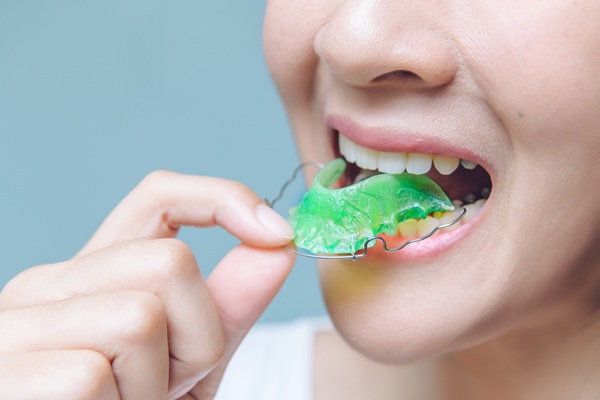
For many patients, headgear worn at home can help with an underbite, while a retainer-like appliance called a bionator can help treat severe overbite in young children. These devices can also help permanent teeth grow in properly, making alignment treatments, such as braces or clear aligner trays, much easier in the future.
Risks of neglecting orthodontic treatment
There are several reasons parents should not dismiss orthodontic treatment for their children. While many of the negative side effects impact children immediately, other conditions can develop or worsen over time.
Unsightly teeth
A crooked smile can be unsightly and impact children for the rest of their lives. Poor alignment can negatively impact self-esteem, affecting social and professional relationships and opportunities. In addition, gaps caused by crooked teeth can continue to shift and worsen over time.
Improper bite formation
Poor alignment is either caused by or can often lead to improper bite formation. In these cases, the teeth have shifted and do not meet properly for effective biting and chewing. This issue can lead to more serious problems of the jaw down the road.
Jaw tension, pain or surgery
When crooked teeth or an improperly shaped jaw result in poor bite alignments, this can create tension and pain in the jaw. The condition may often worsen over time and could lead to the development of TMJ or other serious conditions. In some cases, surgery is needed to correct the problem and relieve chronic pain.
Conclusion
While most traditional orthodontic treatments do not begin until all baby teeth have fallen out, parents of children with orthodontic issues should not wait until this stage to seek initial evaluation. By seeing an orthodontist by age seven, the development of serious alignment issues can be prevented through early treatment. In addition, addressing the issues at a young age can help make future treatment with braces or other aligners more efficient and less invasive. No matter what the age of the patient, orthodontic treatment should not be neglected, as teeth alignment issues can lead to serious complications.
Request an appointment here: https://www.orangecoastortho.com or call Orange Coast Orthodontics at (949) 305-0550 for an appointment in our Laguna Hills office.
Check out what others are saying about our dental services on Yelp: Orthodontist in Laguna Hills, CA.
Recent Posts
An orthodontist has various treatments to help patients achieve a straighter smile. While it is possible to get orthodontic treatment from other dental providers or even online, choosing a specialist like an orthodontist to guide your treatment can be the safest, quickest, and most comfortable route. Understanding why orthodontist-led treatments are the preferred choice for…
After orthodontic treatment, retainers keep teeth from drifting back toward their original positions. A fixed retainer is a thin wire bonded behind the front teeth, usually canine to canine. Because it stays in place, it provides continuous support for alignment, especially in areas that have crowding or spacing. Patients brush carefully around the wire and…
Adult orthodontics offers practical and streamlined solutions to address alignment concerns while working with busy schedules. Whether the goal is correcting crowding, spacing, or bite imbalances, modern techniques help transform complex plans into manageable phases. With streamlined and personalized approaches, most adults find that orthodontic treatment progresses with greater precision and predictability than expected.Each orthodontic…
Clear aligners are one of the most popular methods in orthodontics to address issues with alignment. Over the years, the technology behind aligners has improved greatly, thus allowing for more and more issues to be resolved. In addition to the versatility behind clear aligners, they offer an array of benefits that other approaches do not…